How to tell you have a flat
The car starts pulling to one side, the steering wheel vibrates or you hear a rhythmic thumping underneath. If the car has pressure sensors, a yellow warning light with an exclamation mark comes on.
The first seconds: no hard braking
- Hold the steering wheel firmly with both hands and keep the car straight.
- Ease off the accelerator gently. Do not brake hard.
- Indicate and pull over to the right, as far from the traffic as you can.
- Stop on level, firm ground, not on a bend or a narrow verge.
Make yourself and the car safe
- Turn on the hazard lights.
- Put on the reflective vest before getting out.
- Place the warning triangle far enough behind the car for oncoming drivers to see it in time.
- Get your passengers out of the car and behind the crash barrier if there is one.
Need help right now?Call or send your location. We come out 24/7.
Call now +359 895 239 458Should I change the tyre myself?
If you are in a safe place, have a spare, a jack and a wheel brace and know how to do it, the change takes about 20-30 minutes.
- Loosen the wheel bolts half a turn while the car is still on the ground.
- Place the jack at the marked point under the sill and raise the car.
- Remove the bolts and the wheel and fit the spare.
- Tighten the bolts in a cross pattern, lower the car and tighten them fully.
- Check the spare's pressure as soon as you can.
When it is better to call for help
- On a motorway, on a bend or on a narrow road with no verge.
- At night or in rain, snow or fog.
- If you have no spare or the spare is flat too.
- If the bolts will not budge or the car has low suspension.
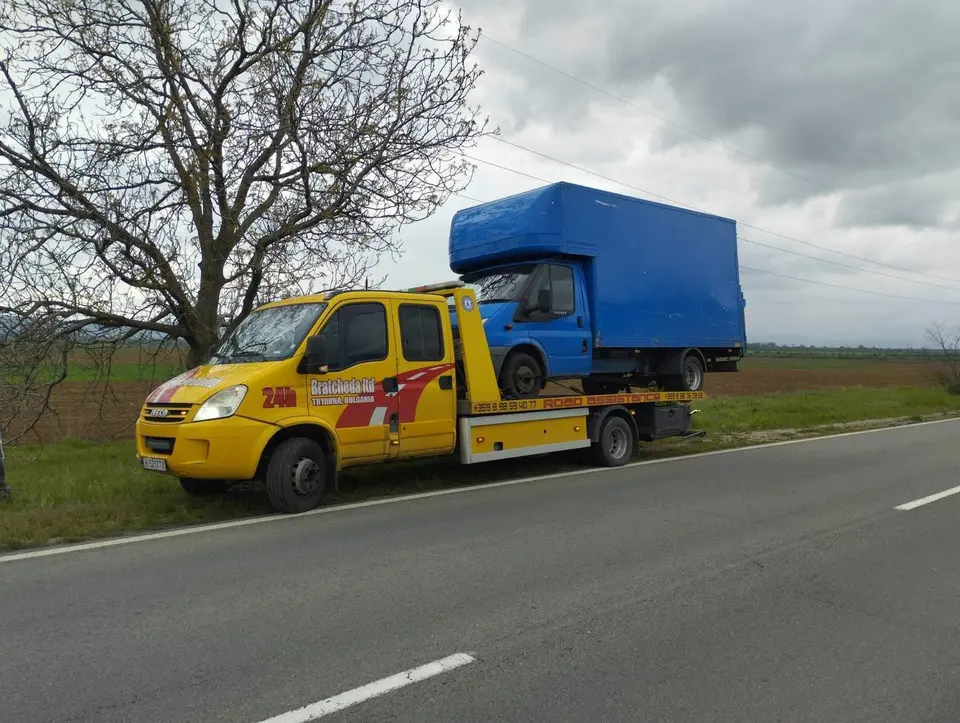
- If the flat is on a van, truck or trailer.
Do not drive far on a flat tyre. Even a few hundred metres can damage the rim, and then the repair costs more.
How a mobile tyre service helps
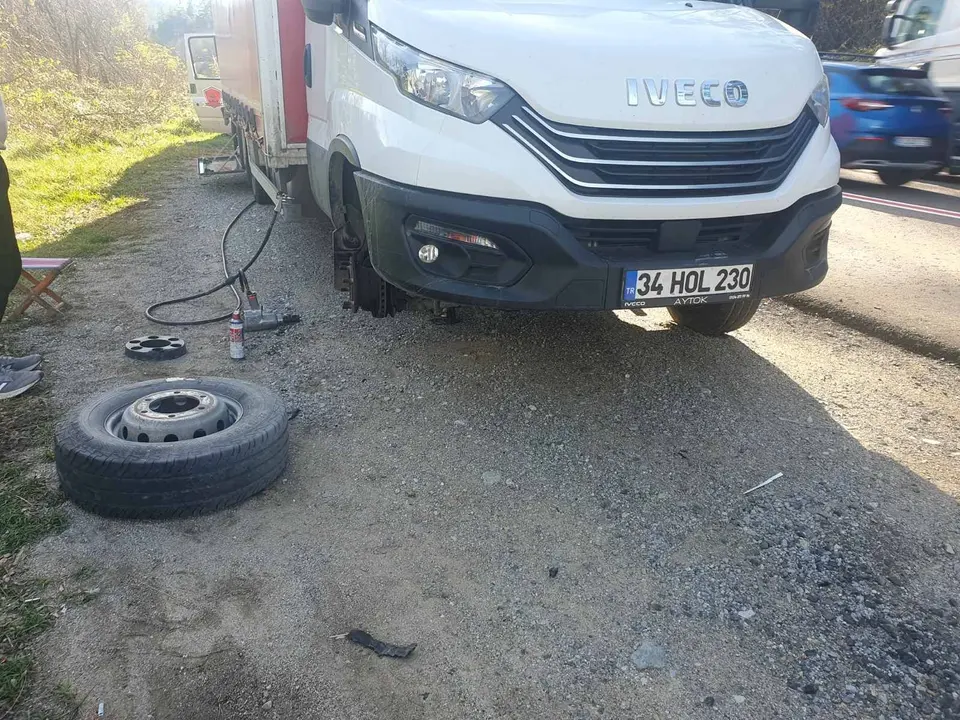
We come to you in an equipped service van. In most cases we repair the tyre on the spot if it was punctured by a nail or screw in the tread. If not, we fit the spare or a new tyre and check the pressure of the others. We work 24/7, including on the Republic Pass.